

We craft emotional experiences for visitors – they are always our starting point. When we approach visitor experiences, we don’t only consider who the visitor is as a person. The information we bear in mind is: what does this visitor want?; what do they need to achieve this experience?; and what is the desired outcome from the experience?
Motivations
Research shows that some of the most common reasons people visit museums and galleries are to learn about a topic, discover something that piques their curiosity and have fun. People also visit to share their experience with friends and family and to rest and relax in a community space. We don’t just want visitors to exist in a space – we want them to feel excited, moved, intrigued and connected.
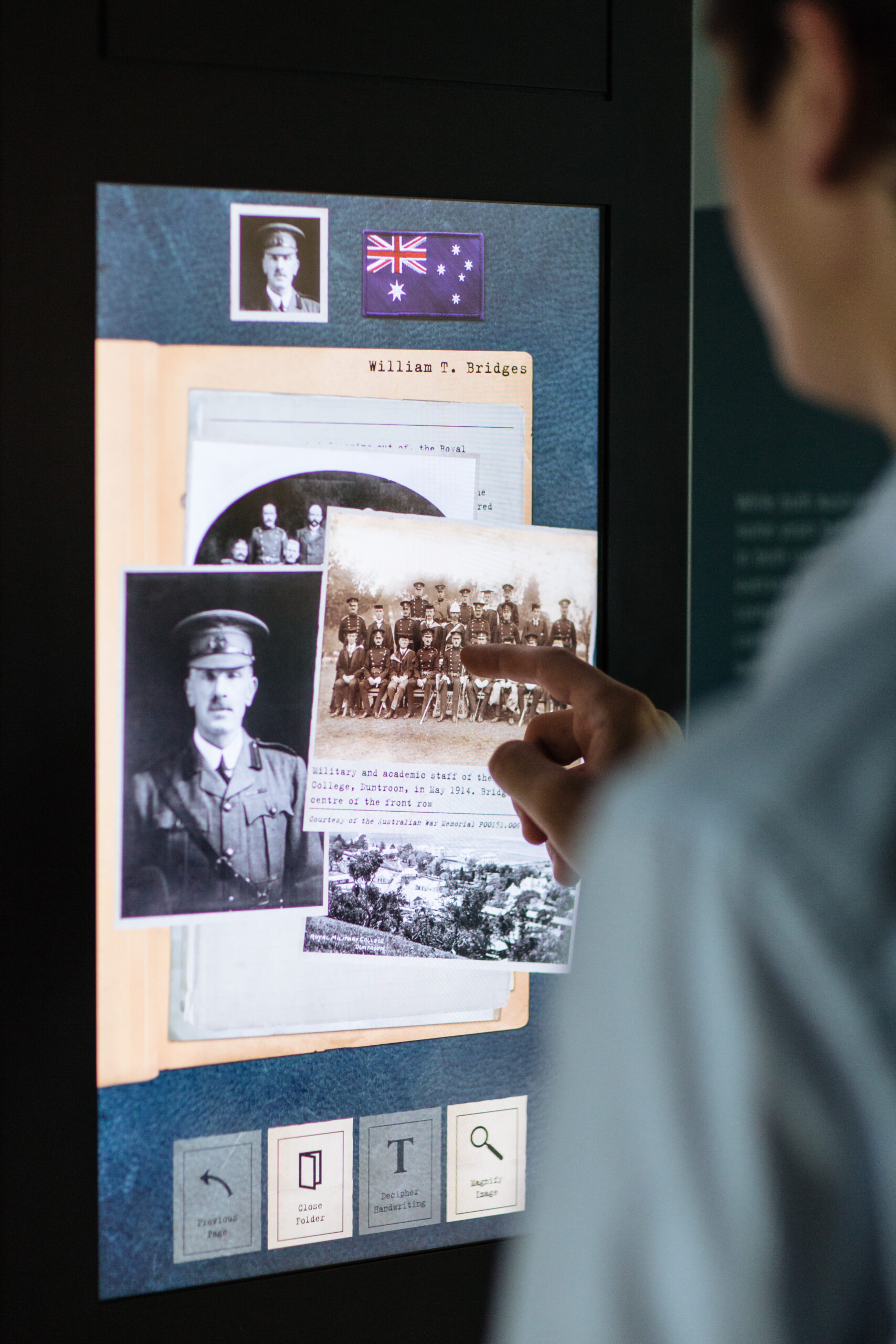
For our work at the National Anzac Centre in Western Australia, we understood that visitors want to learn about their country’s history and to feel connected to the people in their lives who fought in World War I. In this experience, visitors are given a hero card representing someone who served in the war. The visitor journeys with that person through the exhibition, learning about their hero’s enlistment, convoy to Europe, time in the war, and finally what happened to them after the conflict – if they made it home at all. At the end of the space visitors are given the option to reflect and leave a tribute letter. This is an emotional experience that lets modern viewers access history through someone else.
Accessible User Design
Accessibility is important to our work and comes in many forms. A space needs to be designed to ensure the experience supports the community, who will have diverse physical, sensory and language needs. Access is something that needs to be designed into a project, spanning the space, interactives and content. For example, a person with the use of only one hand, someone with a broken arm and a child walking hand-in-hand with their caregiver will all need interactives designed to be operated with just one hand.
A visitor’s needs aren’t always physical. Limited time is another common constraint. Many people won’t have endless time to explore every nook and nuance of our experiences. To meet this need we have to make sure that each element of our designs clearly shows (at a glance) what the visitor will get when they engage with it. This gives people agency to pick and choose what they spend their time on.
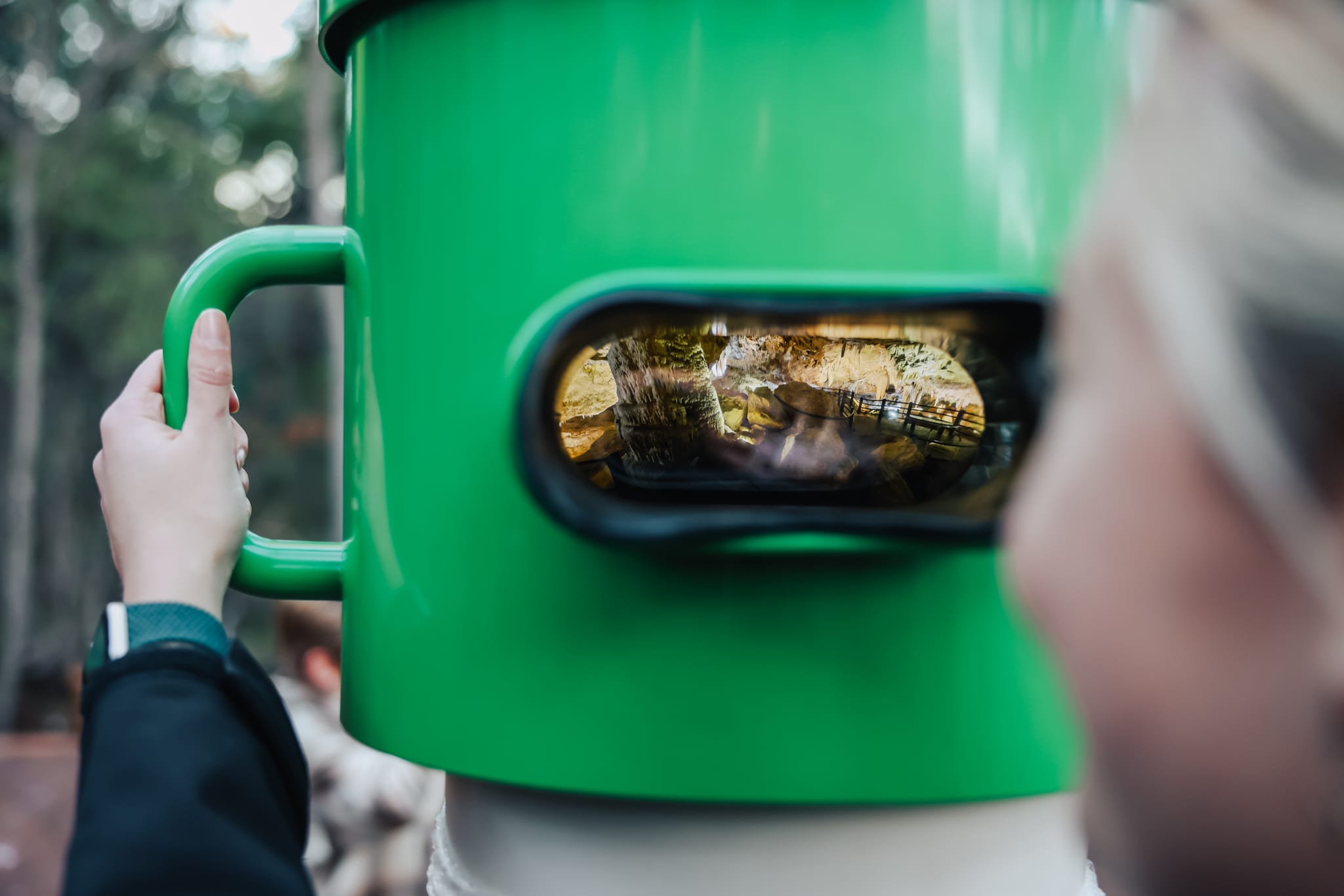
For our Ngilgi Caves Ancient Lands Experience, accessibility was required to meet the needs of one of the target audiences — visitors with wheelchairs, prams or any other reason they’d prefer an experience without steps. The caves themselves have accessibility challenges, so we designed an entirely new, above-ground space for visitors to explore and learn about the geological features below their feet. The 360 digital periscopes bring the cave’s creatures and critters aboveground, letting the visitor access the subterranean system.
Client Considerations
Alongside what our visitors want to do and need in order to achieve these goals, our clients have a wish for their visitors as well. Success can look different across organisations: a museum may want for their visitors to learn, a library may aim for them to feel like the space is theirs and a conservation centre may desire for them to leave knowing how they can help their local environment. Since each client and project is different, these objectives vary depending on the scope and parameters.
The Paparoa Experience’s aim was for the community and tourists alike to experience the local culture and be able to explore environments that otherwise would be inaccessible. The multi-sensory galleries convey the unique geology, diverse ecosystems, and legends of the region. Visitors are even given access to the iconic Pancake Rocks and blowhole, without getting their shoes wet.
Throughout our projects, we strive to gain deeper understanding about audiences by researching how they engage with exhibitions. The audience is fundamental to exhibition development. This is the community we craft the experience for – they shape the design and tone we create.
Images
Interior, National Anzac Centre, Western Australia
War personal card interactive, National Anzac Centre, Western Australia
360 digital periscope, Ngilgi Caves Ancient Lands Experience