

This year’s AMaGA National Conference was held in Canberra, on the land of the Ngunnawal, Ngunawai and Ngambri peoples.
With the conference theme of people, power and politics, the Museum of Australian Democracy at Old Parliament House was an appropriate venue. The proximity to Australia’s original government seat reminded us to examine the power cultural institutions have – and how this power is presented through interpretation and design.
The Aboriginal Tent Embassy sits beyond the doors of Old Parliament House. It is the world’s longest continuous indigenous land rights protest, spanning 54 years.
People, Power, and Politics
Emmanuel Kasarhérou’s opening address proved that we work in a small world! It was a delightful surprise that Kasarhérou discussed the Tjibaou Inaugural Exhibition. Gibson International created a multimedia visual poem for this exhibition back in 1998.
Ngaire Blankenberg’s keynote talk laid bare that large museums struggle with power, even with the well-stocked resources of the Smithsonian – and are required to adapt and learn as projects evolve. Now, Blankenberg directs the Institute for Creative Repair and A42, a micro-heritage museum that preserves, shares and renews African heritage in Johannesburg. Visitors can stay a night (or more!) in a curated bedroom, literally folding themselves into the story.
The elephant in the room was how our sector engages with artificial intelligence (AI). Rather than spiralling into a human versus machine match, the discussion was framed by trust and authenticity. Speakers acknowledged AI as a tool, whether that be ACMI’s ghost in the machine AI CEO Seb Chan or the Museum of Discovery’s AI Avatars. However, organisations are responsible to transparently state how human practice underpins digital creations if AI is used.
Purpose and Patience
It became clear that purpose and patience are central to these conversations. Indigenous knowledge was woven throughout the keynote talks and workshops, making us question how organisations connect programmes and exhibitions to the local land and community. These collaborative relationships take time to form – when they do, authenticity and trust follow in their footsteps.
We agree that authentic access needs to be designed into projects from the get-go. It was heartening to see this purpose embedded in so many conversations. Speakers charged organisations with the responsibility to develop trust, create community and to do more. This is something we practice in Aotearoa New Zealand, and are familiar with from our projects.
Reflections
Canberra was enriching and insightful – if sprawling and at times appearing less populated than Wellington.
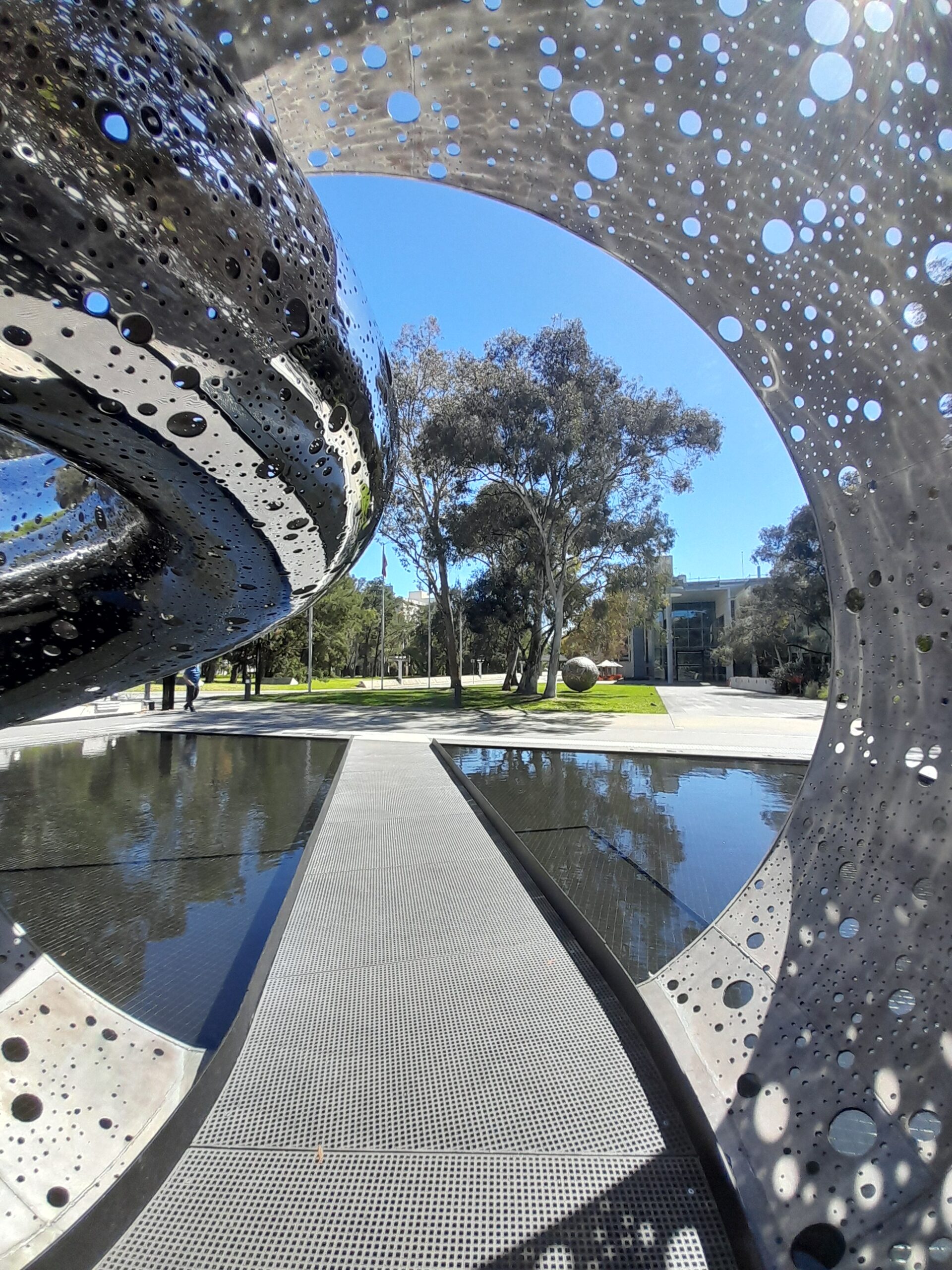
We visited six museums and galleries, eager to see how exhibitions are being developed across the Tasman. These ranged from the emotional Australian War Memorial Museum to the National Gallery’s Sculpture Garden, where you can walk into the belly of an artwork.
Throughout the week, coffee orders were swiftly rounded up to two espresso shots. And unfortunately, we’ll have to continue to disagree about the pronunciation of manuka.
Images
Detail of Lindy Lee Ouroboros, 2021-2024
Lindy Lee Ouroboros, 2021-2024
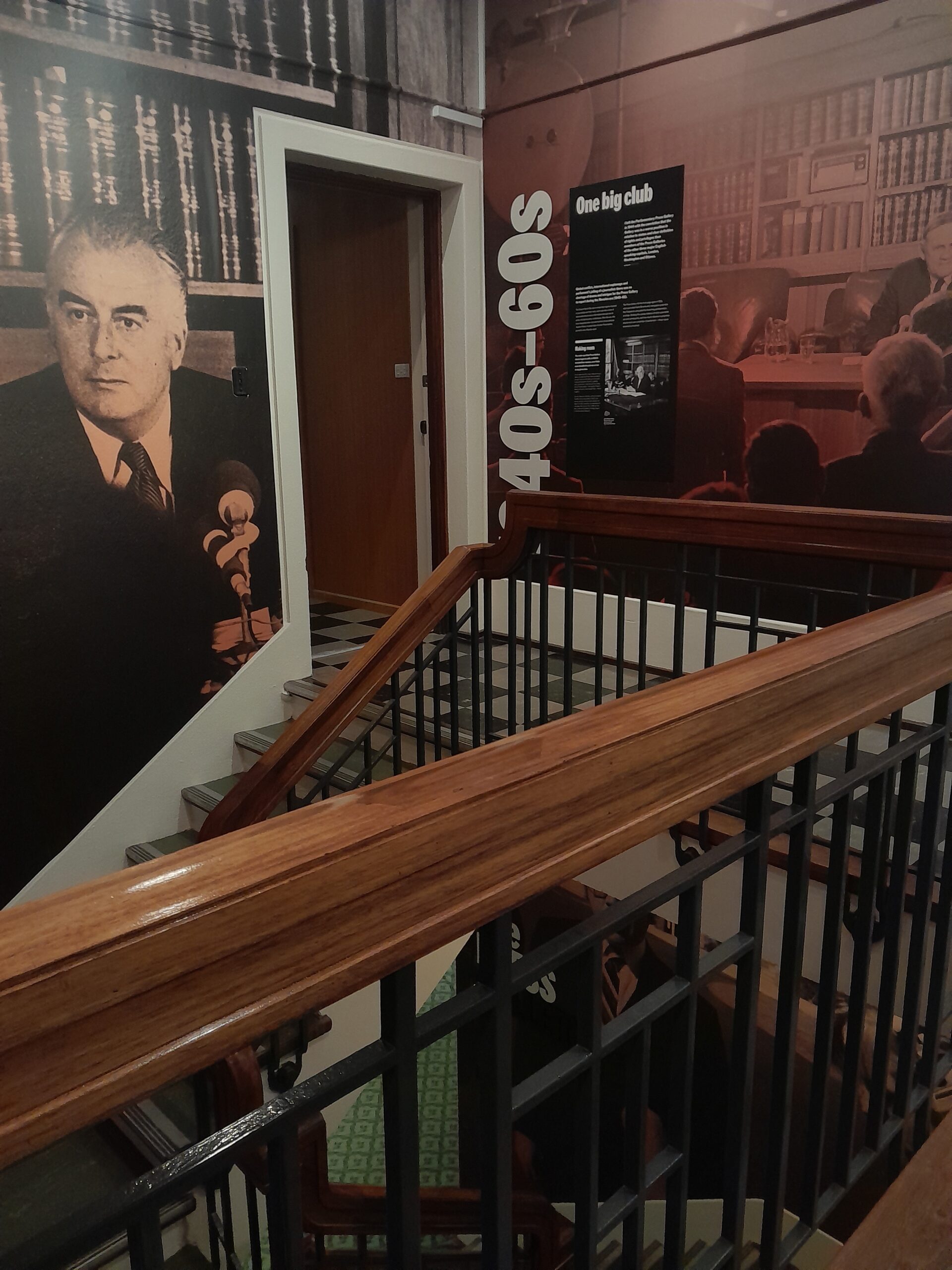
The Press Gallery, Museum of Australian Democracy at Old Parliament House
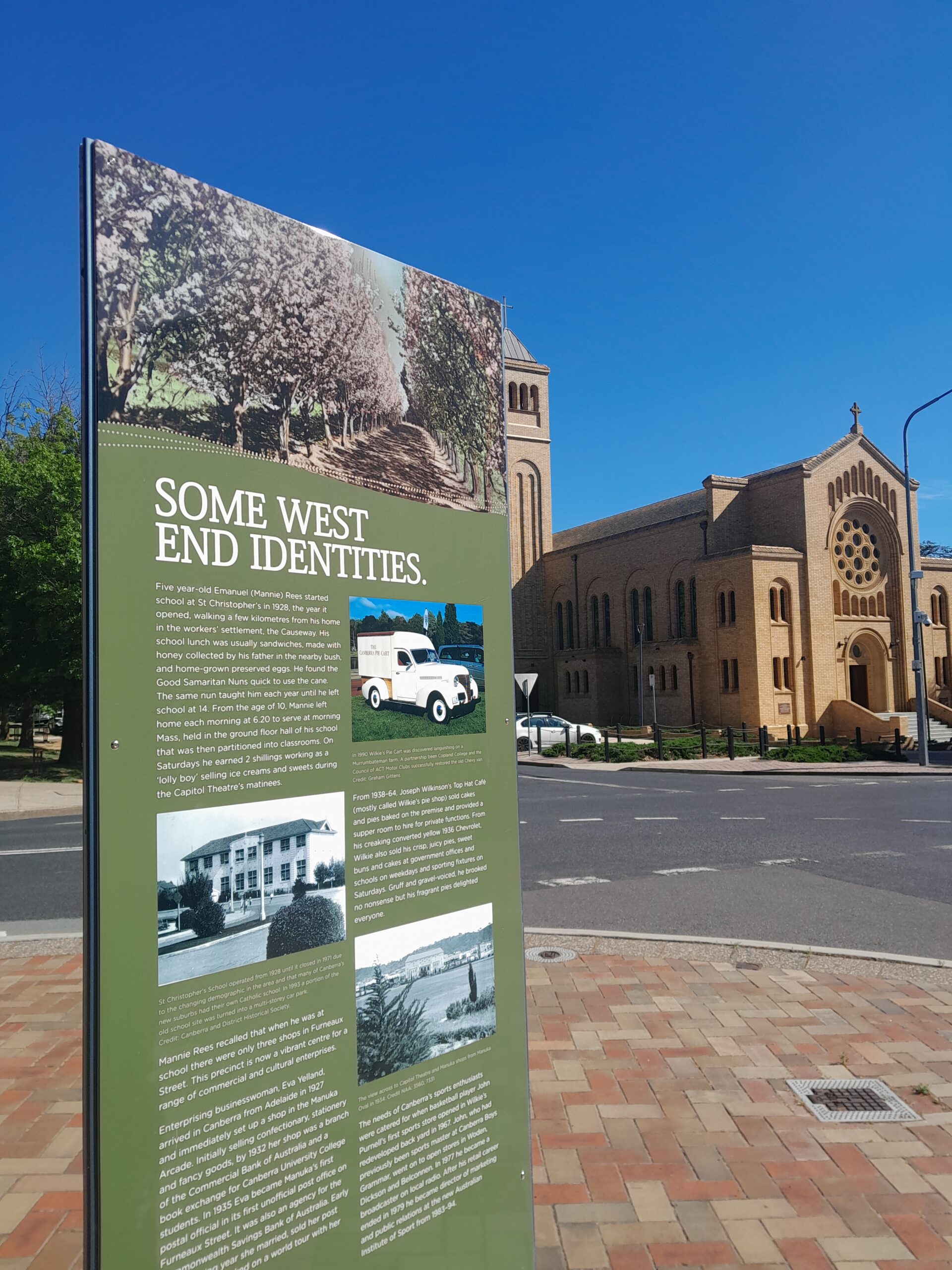
Some West End Identities, Manuka, Canberra